From Dreaming to Doing: How We Chose Our Little Corner of Italy
After eight years of exploring Italy—from vineyard-covered hills to sun-soaked villages—we finally found a place to call our own. In this post, we share the story behind choosing our home near Orvieto, the regions we fell for along the way, and what helped us move from dreaming to actually making it happen.

We bought a home Near Orvieto!
How we chose our location and other regions we considered
We are couple from from Northern California who just did something crazy! We just purchased a home in Italy—on a small, carefully stretched budget that shaped nearly every decision we made.
For the past eight years, we’ve visited Italy once or twice a year, and every single trip included some version of “let’s look at property while we’re here.” What started as curiosity slowly turned into intention. In 2021, we took a leap of faith, secured our elective residency, and moved to the city center of Orvieto in Umbria. Life, as it does, eventually called us back to California—but we never let go of the dream to live part-time in Italy. Over the years, we explored dozens of regions from tip to toe, each offering something uniquely beautiful.
Before we found the one, we wandered—digitally and physically—through some of Italy’s most beautiful and varied regions. What kept us up at night wasn’t budgets or renovations—it was something much harder to solve: how on earth do you choose just one place in a country as impossibly beautiful and diverse as Italy? Every region felt like a different version of a dream. The vineyards of the north, the hill towns of the center, the sun-drenched south—each one pulled us in a new direction. That question—how do we choose?—led to months of circling, second-guessing, and, ultimately, a fair amount of analysis paralysis. In the end, we found our place in a frazione (municipality) of Orvieto, high atop a mountain—a setting that feels both peaceful and perfectly us.
Other towns on our list:
Todi: Hilltop Charm Within Reach
Todi was one of the first places that truly felt possible. It struck that delicate balance between beauty and affordability. With our modest budget of around $70k, we found several options just outside the historic center—close enough to enjoy the town, but far enough to stay within budget. If we had stretched financially, we could have landed right in the center, surrounded by medieval architecture and lively piazzas. Still, the outskirts offered incredible value and sweeping countryside views that were hard to ignore.
Ficulle: The One That Almost Was
One Ficulle home stole our hearts. It’s close to Orvieto and truly has all the requirements we sought. The home was move-in-ready that felt warm and welcoming the moment we saw it. The owner was kind, the process felt smooth, and the agent was easy to work with, responsive and very helpful. It was, unfortunately, above what we had planned or felt comfortable spending. We tried to make it work—it became our “backup dream.” In the end, we chose the home we have now, largely because of the expansive garden just outside our kitchen and living space. And- it was well within our total budget. Still, Ficulle will always be our “almost.”
Lake Trasimeno: Affordable Potential in the Small Towns
The Lake Trasimeno area offered a different kind of appeal: a mix of accessibility, charm, and opportunity—especially in the smaller towns surrounding Castiglione del Lago. We spent time exploring places like Tuoro sul Trasimeno, Passignano sul Trasimeno, and the quiet countryside hamlets dotted between them. These areas had a slower, more local feel while still being close enough to the lake’s energy and main line of transportation plus, amenities. There were plenty of affordable fixer-uppers, each one brimming with potential. We often found ourselves imagining restored stone homes with terraces overlooking olive groves or glimpses of the water. Ultimately, though, we realized that wasn’t our spot.
Tuscany: Beauty, Perspective, and a Bit of Distance
Tuscany naturally pulled us in—how could it not? But our experiences there helped us better understand what “fit” really meant for us. There are certainly affordable options outside of the famous towns, but overall the prices were higher than Umbria
- Fivizzano: undeniably charming, green, and surprisingly affordable. On paper, it checked so many boxes. And yet, it felt more remote than we expected. Even though it’s only about 50 minutes to the sea near Carrara, there was something about the winding roads and tucked-away feeling that made it seem farther removed from daily conveniences. It’s hard to explain—logically it worked, but emotionally it didn’t quite land for us.
- Chianni: this is the Tuscany of postcards—rolling hills, golden light, and those “wow” views around every corner. The town itself is cute and full of character. But strangely, it didn’t leave the lasting impression we expected. We kept waiting for that "this is it" feeling, and it just never quite arrived.
Puglia: A Southern Dream (With a Catch)
Puglia felt like stepping into a dream—whitewashed towns, star-vaulted ceilings, and endless sunshine. I could easily picture us there, soaking in the slow pace of life. But practicality nudged us back. Summers are intensely hot, winters can feel quiet and isolated, and—most importantly—there are no nearby mountains for cycling, which mattered to Miguel. If it had been just my decision, we might still be swooning over those white cities.
Piemonte: Familiar, But Too Cold
The Langhe region in Piemonte felt like home in a surprising way. Coming from Northern California, the rolling vineyards reminded us so much of Sonoma and Napa. It was comforting, almost nostalgic. Homes were spacious and reasonably priced, and Turin nearby added a layer of cultural richness that we loved. But the winters—cold, snowy, and long—ultimately made it a pass for us.
What We Were Really Looking For
As we explored, our criteria became clearer:
- Accessibility: Close to transportation and an international airport. We didn’t want to feel cut off.
- Healthcare: Within about 20 minutes of a major hospital—non-negotiable.
- Landscape: Rolling hills, open space, and that quintessential Italian countryside.
- Language: Enough English spoken to help bridge the gap as we improve our Italian.
- Space: Ideally 3 bedrooms and 2 bathrooms (we had to compromise on the second bathroom for now).
- Outdoor Living: A place to enjoy mornings, evenings, and everything in between outside.
- Minimal Renovations: We were ready for cosmetic updates—but quickly learned even “minor” fixes can add up. We chose a place that could be improved over time.
The Biggest Lesson: Choose the Region First
The hardest part wasn’t finding a house—it was choosing where to be. Italy is full of affordable homes, and it’s easy to fall in love with a property without considering the bigger picture. We had to keep reminding ourselves: a dreamy house in the wrong location wouldn’t work for our lifestyle.
We needed a balance—somewhere that felt peaceful but not isolated, rural but not remote. Coming from California, a 20-minute drive to essentials didn’t faze us. In fact, a scenic country drive felt like an upgrade.
We searched from north to south—from Piemonte all the way to Lecce—but kept circling back to Umbria. The areas around Orvieto, Todi, and Lake Trasimeno just felt right. We’re not big city people, and while the sea is beautiful, it wasn’t essential for us.
What really drew us in—and ultimately helped us feel settled in our decision—was how perfectly Orvieto is positioned for everyday life. It’s right in the heart of Italy, which means you can hop on a train and be in Rome or Florence in time for lunch. That balance of accessibility and tranquility felt just right for us. And then there’s the landscape—rolling hills, vineyards, olive groves, and those iconic cypress-lined views that seem to quietly say, “this is the place.” Somehow, it felt like home even before we had the keys in hand.
If you are still searching
If you’re feeling stuck trying to choose where to land, you’re definitely not alone. We’ve had so many conversations with expats, second-home owners, and fellow dreamers, and this seems to be the part everyone struggles with.
Just keep going. Keep exploring, keep dreaming, and trust that the right place will start to feel clear.
Reach out - We love sharing what we've learned
And if you ever want to chat or have questions about our experience, feel free to reach out. We’re always happy to share what we’ve learned.
Ci vediamo dopo!
Maggie
.
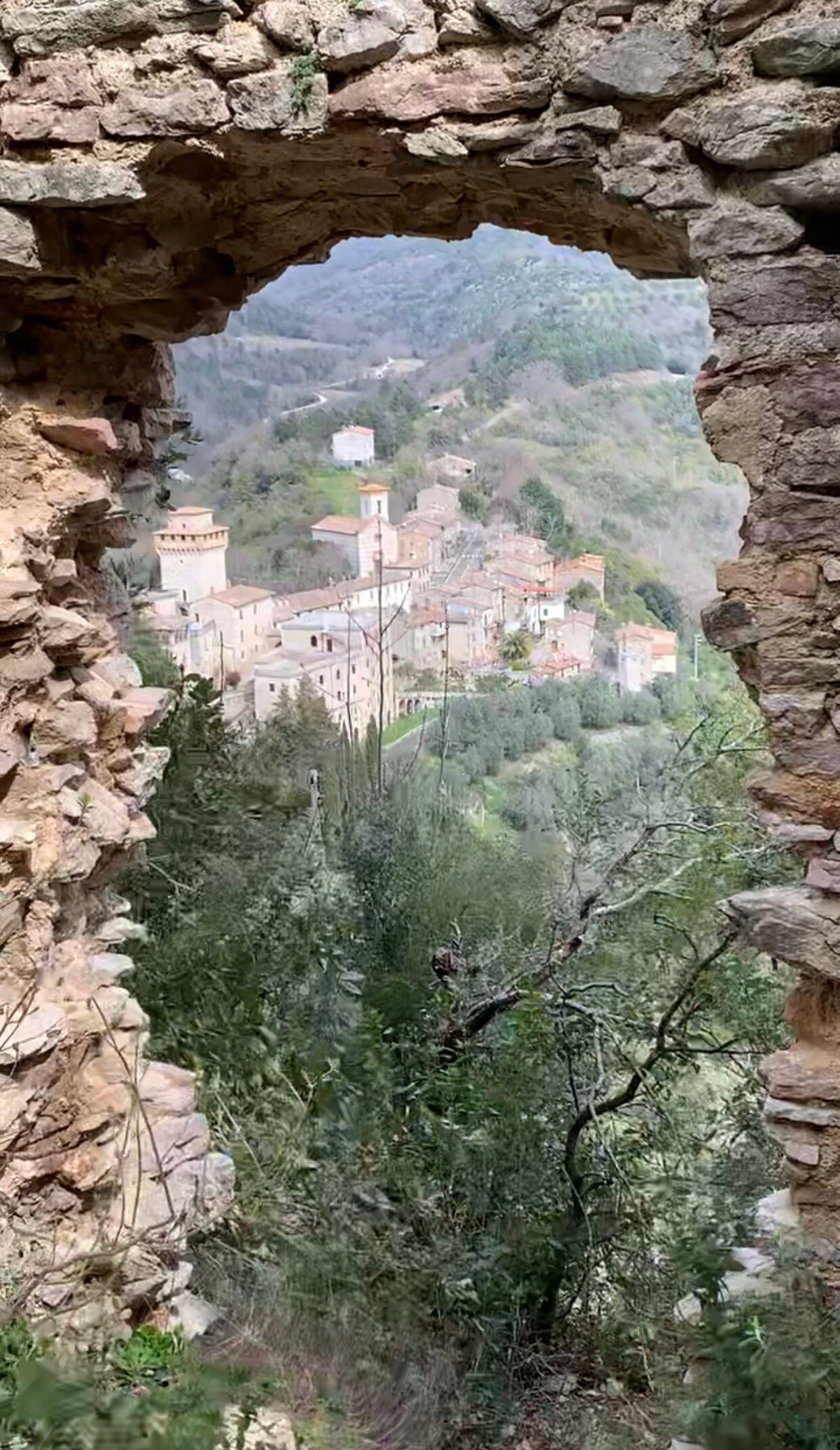
Easter in Umbria
Today, for Easter (Pasqua), we were invited to spend the afternoon with a local family of three. A sweet couple from our village and their daughter. The parents don't speak English, but the daughter helps bridge the gap with a bit of both languages. Fortunately, my five years of daily Italian lessons are finally paying off. I was able to follow much of the conversation, and more importantly, feel it.
They welcomed us not just into their home, but into their history. And in small Italian villages, history isn’t something you read about, it’s something you sit across from at the table.
The father is 91 years old and still tends to his small farm just outside the village. Every day we see him walking there, quietly and steadily, caring for his rabbits, chickens, and garden, gathering wood, and doing whatever the land asks of him. It’s not a hobby, it’s a way of life that has endured for generations. He grew up in the nearby region and later worked in an office for the Italian military, but it’s clear his heart has always belonged to the land. We shared a commonality both of us growing up as farm workers. He reached over and put his hand on my shoulder as if to say, I know you.
The mother was born here in our tiny village, a place where roots run deep. She attended university, no small feat for a woman of her generation and went on to teach school in nearby Orvieto for most of her life. That’s where she met Feliciano, beginning a partnership that has now spanned decades of change, challenge, and quiet resilience.
When we gently asked about her experiences during World War II, the tone shifted. In small Italian towns like this, the war was not an abstract global event, it was immediate, personal, and often terrifying. These villages, tucked into hills and valleys, became strategic corridors and, at times, targets. Anna recalled how they would run into the forests as bombs fell nearby. We had heard from others that bridges in the area were destroyed, likely part of the German retreat as Allied forces advanced north through Italy.
What stood out, though, was not just the fear, but the memory of relief. She spoke with gratitude about the American Allies who eventually arrived. In many of these rural communities, liberation wasn’t just a military turning point, it was the moment life began again.
Their daughter now lives in Rome and teaches middle school, continuing her mother’s legacy in education. Despite the distance, she returns every weekend, a reminder that in Italy, family is not something you schedule, it’s something you sustain.
A friend, who moved to this tiny village from California about a year ago, often says that living in a place like this is like stepping into another time and I know exactly what he means.
Listening to their stories is the reason I’ve stayed committed to learning Italian. These are not stories you can translate fully, they have to be heard, felt, and shared in the language they were lived in.
-Ciao for now, Miguel
